





fbpx
Sale!

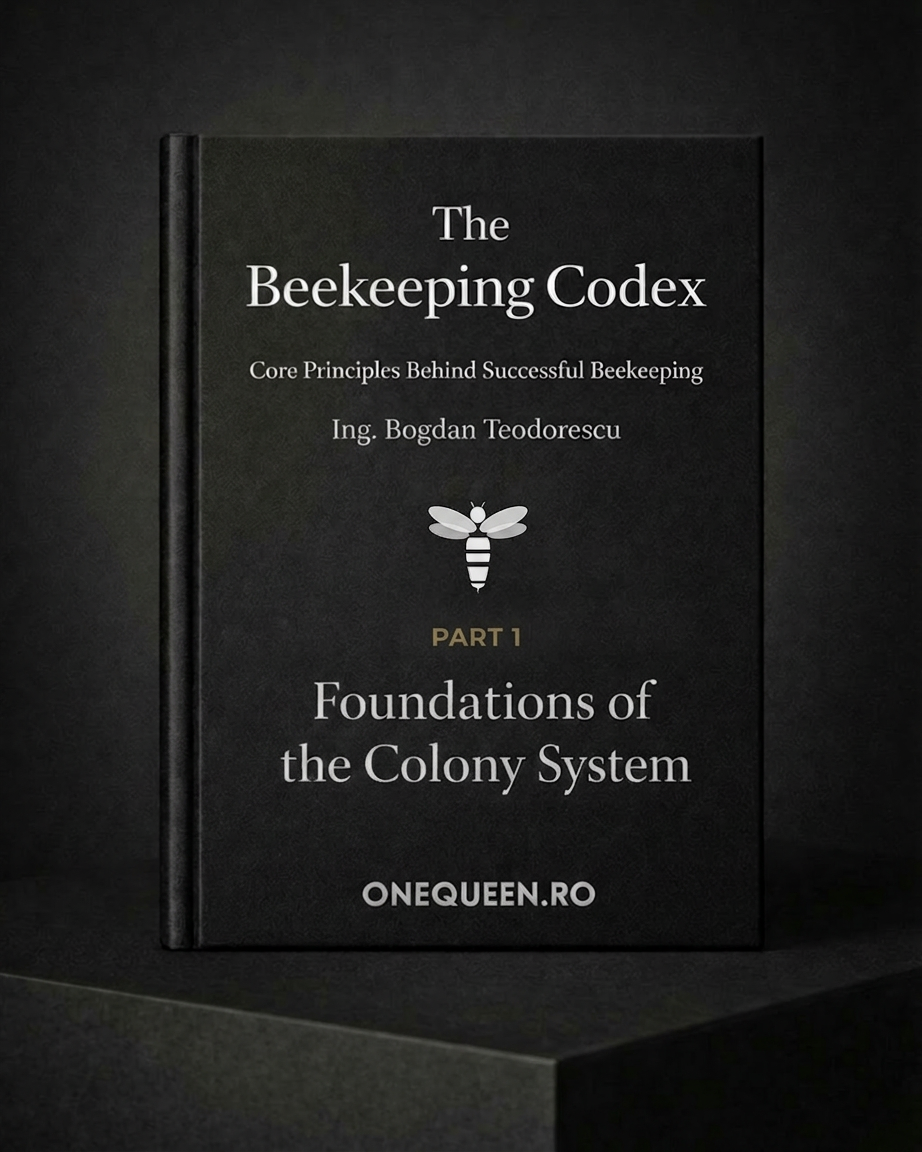
The Beekeeping Codex Part 1 Foundations of the Colony System

9,99 4,99

This is a digital product. After purchase, you’ll receive an email with two digital editions of The Beekeeping Codex Part 1: Foundations of the Colony System.

The first edition is an 18-page standard format version optimized for PC and tablet reading.

The second edition is a 37-page, enlarged format version optimized for mobile reading for a smoother and more comfortable experience on smaller screens.

Due to the nature of digital goods, which cannot truly be “returned”, no refunds are available.

Quick buy

The Colony is the Organism

Energy Economics of the Colony

Time as a Beekeeping Variable

Where Colonies Break

Chapter 1: The Colony Is the Organism

Most people start beekeeping thinking they will take care of the bees.

They watch the entrance, count the bodies on the frames, judge strength by numbers, and search for reassurance in visible activity.

It feels right because bees are what the eye can follow and what the hands can touch.

A busy hive looks strong.

A quiet hive looks weak.

This is where confusion begins…

Chapter 2: Energy Economics of the Colony

Most beekeepers think in objects.

Frames, boxes, honey, wood, or polystyrene hives.

The colony does not. The colony thinks in energy.

Energy is the only currency that pays for everything the hive must do.

Heat, wax, flight, brood, defense, repair.

Even stillness has a cost.

A colony does not survive because it wants to.

It survives because it can afford to.

Chapter 3: Time as a Beekeeping Variable

Most beekeepers treat time like something that just happens and rarely give it the weight it deserves.

The colony treats time like a variable it must manage, because time is where most beekeeping mistakes mature.

Not in the moment you make them, but in the weeks after, when the colony is forced to pay.

Chapter 4: Where Colonies Break

Most beekeepers assume colonies fail because of one big cause.

A bad queen, bad weather, Varroa, a weak flow, a mistake.

They also assume colonies respond in straight lines.

A little more brood should mean a little more strength.

A little more space should mean a little more honey.

A little more feeding should mean a little more safety.

When something feels weak, the instinct is to add something.

Colonies rarely respond that way…